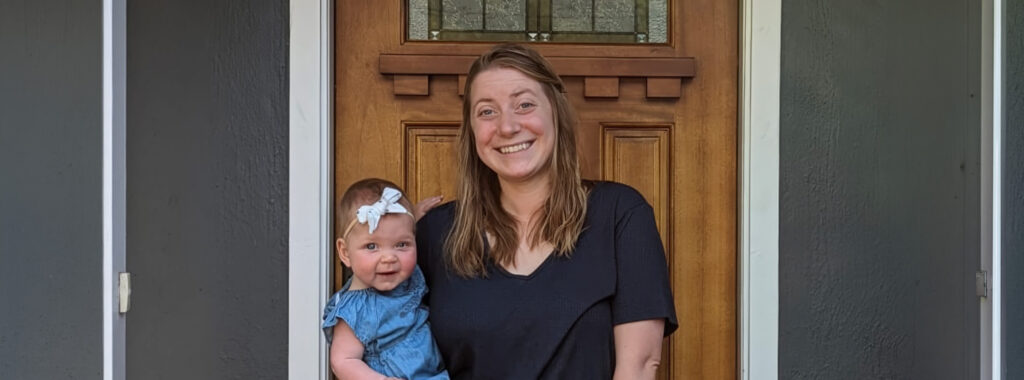
A first-time mom reflects on the early days of breastfeeding, and provides practical guidance and supportive resources for lactating mothers.
“You’re a good mom, even when you feel bad. Breastfeeding is hard and unpredictable. Let’s assess your situation together and pivot as needed.”
Those words, spoken by a lactation consultant to our hospital baby group when my first baby was four weeks old, were like a balm to my tired, weary soul. I had no idea I had been holding my breath for so long – afraid to ask for help, afraid I was doing something wrong, afraid my baby wasn’t getting the essential nutrients he needed to thrive. After all, breastfeeding was supposed to just click – or so I thought.

I knew breastfeeding could be hard (I’d heard that plenty!), and I knew it was good for my health and my baby’s, but I never knew it could be so wildly inconsistent. As the months went on, just when I thought I had it figured out, something always seemed to shift: a developmental leap, a schedule change, a fussy or distracted baby, a clogged duct, painful baby gas that I misinterpreted for hunger, a pump session that yielded half of what it did yesterday. The list goes on.
When you make the choice to breastfeed your baby, it’s also important to know how deeply tied “success” is to your body’s cues, your stress levels, your sleep (or lack of it!), and even the time of day. While you can’t control every twist and turn, you can prepare for the unpredictability. Here is what Mothers’ Milk Bank California recommends, guided by our own medical professionals and top leaders in breastfeeding research and advocacy:
Get informed
Contrary to popular belief (and even though your body prepares for it before your baby is even born!), breastfeeding is a learned skill that you and your little one develop together. This is why breastfeeding support and education is vital – research tells us that mothers who have experienced really good breastfeeding support are far more likely to achieve their breastfeeding goals. And instead of trying to figure breastfeeding out in the fog of postpartum exhaustion while your newborn cries at your chest, consider learning ahead of time. Many hospitals include breastfeeding education in their childbirth classes, offering hands-on guidance and space to ask questions. If you have a friend who’s currently nursing, ask if she’d be willing to show you how she helps her baby latch. Mothers’ Milk Bank California has plenty of resources and trusted information to help you as well.
Like so much of early parenthood, breastfeeding takes practice, patience, and support. While there are unknowns, like what your milk supply will be like or how your baby will respond at first, it’s good to be informed about things like recognizing the signs of baby’s hunger, a clogged duct or engorgement, and how to safely store your excess milk. You’ll have enough to learn about as you go; it’s best to come prepared with confidence and the right tools in place if you need them!
Understand supply and demand
Lactation is based on the concept of demand and supply. The more the baby demands (often in the form of frequent cluster feeds), the more milk your body will supply, until you are producing just the right amount your baby needs. “It takes about six weeks on average to establish a full milk supply, which can be anywhere from 24 to 32 ounces, give or take,”says Julia Selezneva, MD, a pediatrician and International Board Certified Lactation Consultant (IBCLC) at Stanford Medicine Children’s Health. “That just depends on what the baby establishes they need to grow adequately on their own growth curve. Then it more or less stays the same until they start solid foods and then slowly decreases as the demand decreases.” Sometimes there are complications during pregnancy or birth that cause milk production to be delayed; as always, talk to your care provider to better understand your body and your baby’s needs.
If your milk supply ends up being more than your baby needs, there is no greater gift than to help other families by becoming a milk donor!
Get comfortable
No one really tells you just how much time you spend in your nursery glider, on the living room couch, or tucked away in a quiet space breastfeeding your baby – especially in the early days of cluster feeding. Finding breastfeeding positions that feel good for both you and your baby is essential – not just for comfort but for supporting effective feeding and promoting a healthy milk supply. You don’t need anything fancy – the right position to be in is the position that feels right for you. A few pillows can help take the strain off your back, shoulders, or wrists. While nurses, doulas, and lactation consultants can help you figure out positions that seem to work best, it can change over time and that’s okay. Breast size, baby’s ease of latch, and speed of milk letdown are all factors to consider when finding the right breastfeeding position.
Get help
Like just about everything else in parenting, breastfeeding is a journey of learning. Even though your situation is unique, you’re never the only one struggling. During those late night feedings and challenges, it’s helpful just to remember that asking for help is one of the smartest things you can do for your own health and the health of your baby. The more we remember that a challenge doesn’t mean failure, the easier it is to lean on community, professionals, and partners for encouragement and practical help. Breastfeeding USA has a simple search tool that allows you to find a qualified breastfeeding counselor in your area, and we at Mothers’ Milk Bank California are always a phone call away. Our website has a plethora of resources, FAQs, the latest research, and more.
For those struggling to breastfeed: If you are unable to breastfeed or need supplemental milk for your baby, donor breast milk can be a lifesaving option. Reach out to us to discuss your needs and begin the process of obtaining donor breast milk. Our team will guide you through the steps and answer any questions you may have.
For milk donors: Here at Mothers’ Milk Bank, we collaborate with a network of community partners, including the California Breastfeeding Coalition, Breastfeed LA, WIC and others to ensure that you have access to a wide range of resources and support services. If you decide to become a milk donor, you will never be alone in navigating the lactation and donation journey!